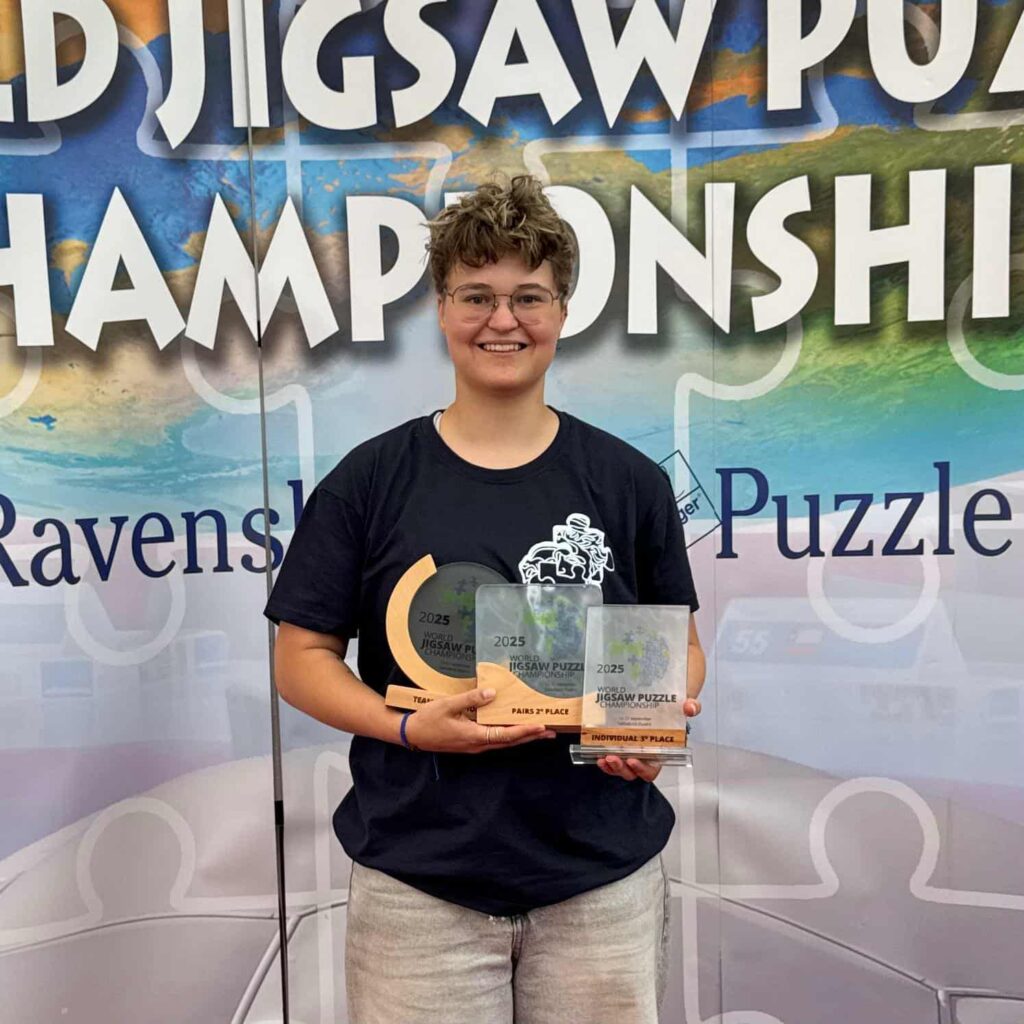

Katharina Reiner from Germany has closed the 2025 competition season with stellar results all throughout the year, achieving the title of European Champion in all three categories in Hungary in July and a podium placement in all three categories at the World Jigsaw Puzzle Championship in Spain in September. She has now agreed to an interview with SPN.
SPN: Please walk us through your path to the results you have achieved this year: what key moments and turning points stand out to you?
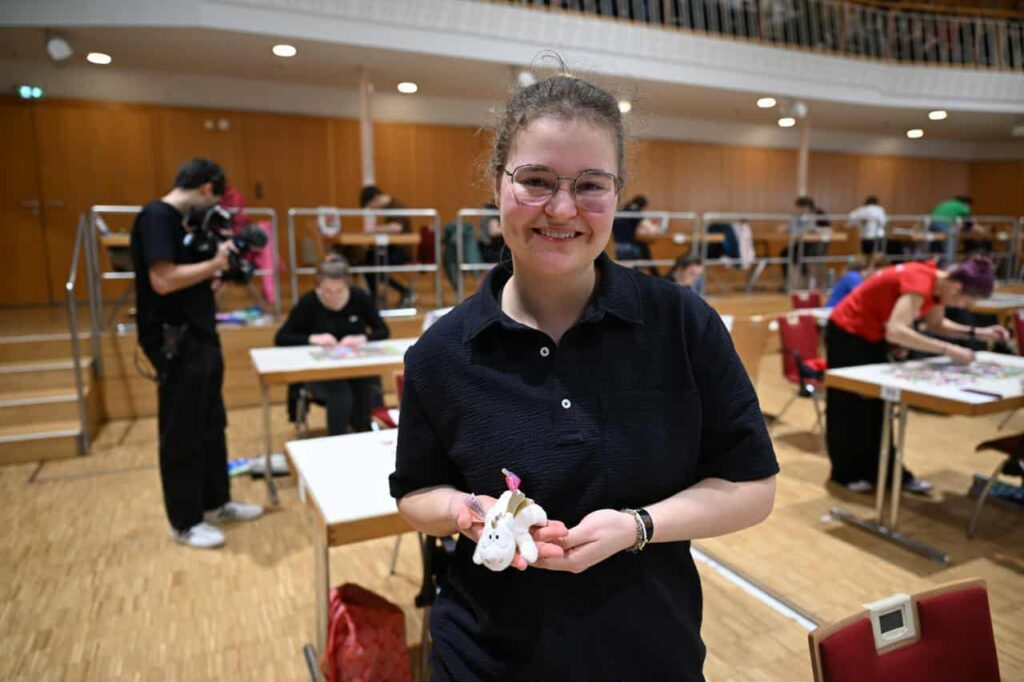
KR: The year started with the German Nationals, where I had quite a hard time in terms of staying calm and having fun with the puzzles. I had dinner with some Swiss puzzlers and I will say: This evening and especially my conversation with Annemie (Kostezer) is one of the key moments that helped me establish a much more stable mindset. I can now stay centered and don’t let others or organizational circumstances throw me off balance. That is also why the unicorn became my mascot: to remind me of this precious learning.
When I travelled to EJPC, I didn’t have high expectations – you could also say I just didn’t believe in myself at all. I was in the third qualification round and seeing these incredibly fast times in the earlier rounds made me very nervous. I blindly applied my mental strategies to calm down and take the pressure off myself – and when that worked and I managed to stay focused during my puzzle, I knew that I had reached another milestone.
Winning all categories gave me some convincing reasons to keep building my confidence. I attended this year’s Worlds with the best mental state I have ever had at a competition so far. I knew I could win, but even if I didn’t, I knew who I am as a person and as a puzzler – and the competition wouldn’t define anything about me.
WJPC itself was a rough ride though. After “losing” the first qualifier, I had to put in a lot of work to rebuild my mindset in a pretty short time. I started doubting myself again and also was afraid of how I would feel if I “lost” another time. But when I heard people cheering in the individual final before I was done, it didn’t make me feel like I had failed. I was fine. And I realised that all the work I’d put in over the past months had paid off – and I could truly be happy about my third place.
SPN: What does a typical training session look like for you when you’re preparing for a major competition? Are you very systematic in your approach to competitive puzzling?
KR: Preparing for a major competition differs from regular training for me in the sense that I puzzle a lot more – I almost don’t do anything else. I do as many puzzles, one after the other, as I can. However in this process I try not to get demotivated by times that are not satisfying enough, but focus on the fact that this training will help me and in the competition context everything will work out.
Depending on whether released or unreleased puzzles will come up, I train either expected images or images I’ve not done before. In general, I try to get the piece shapes and how they all connect with each other into my short term memory. I think for me, this is the main aspect that helps me puzzle faster. Only secondarily I try to train how to approach unseen images. Hence, I try to improve choosing which section to do when, when to move on, how to deal with hard elements and so on.
SPN: How much time do you dedicate to puzzling on an average week, be it speed or casual puzzling?
KR: In the last months during my off-semester I had a lot of free time that I spent on puzzling. However, now my day-to-day life got a little more stressful again and I am happy when I can puzzle more than two hours a week.
SPN: Do you have particular strategies or techniques that you always rely on?
KR: What always helps me to do better is getting mentally ready in the last minutes before the competition starts. Getting in the flow state lets the puzzle come together more or less by itself, so that is what I try to achieve. Besides that, I tend to forget everything I analytically prepared during the training and it feels like I’m doing a puzzle for the first time and have no idea what works and what doesn’t, *haha*.
SPN: You are famous for the mental preparation that you do for competing. Do you have any strategies or rituals before competitions and especially before important rounds of puzzling?
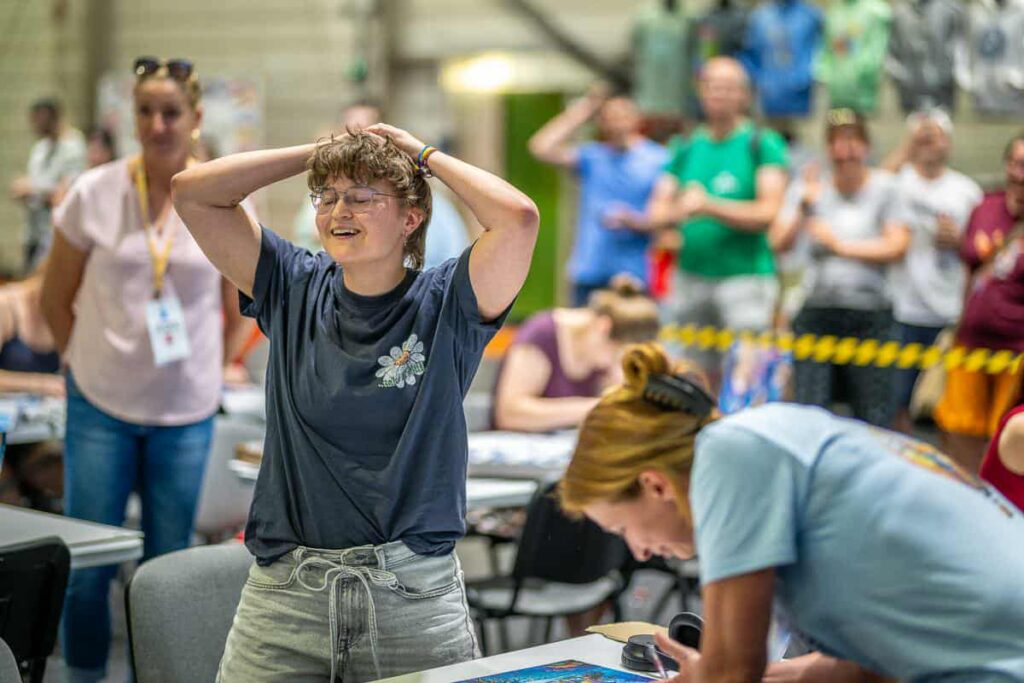
KR: I established some rituals during this year’s competition season (from German nationals in February to EJPC to WJPC). They consist of two parts:
First, trying to take the pressure off myself. This is a pretty universal aspect for any challenge, so I can use many of the general strategies that proved themselves helpful. Among these are positive affirmations and reminding myself of the skills I have and things I achieved. I also look at photos of me and my friends, family and my girlfriend to calm down.
And second, hyping myself up for the upcoming contest and getting in an energized mood. I called my best friend and gym buddy who is really good at motivating me right before the individual final at worlds and told him to just shout at me and tell me I can do it!
SPN: What was the most challenging puzzle for you during the 2025 competition season (and why?)?
KR: The puzzle from WJPC that was the hardest for me was Excalibur. I think it is a very rough image in general, but additionally I was really sick at worlds and the morning of this qualifier I didn’t have a lot of energy. The team’s qualifier was similar, but at least I had my team to lift me up.
SPN: Are there differences for you in competing individually vs. in pairs vs. teams in terms of mindset and strategy?
KR: Absolutely. First of all, it’s easier to keep a positive and confident mindset when you have friends puzzling with you. Telling each other to keep going helps everyone, but it is also a little less competitive and more focused on fun than individual competitions. The strategy also changes a lot in teams, just because you have so many different people to combine. But I will say that my team and I, and even more Chiara and I have found our way, such that I can puzzle as intuitively, like I would do individually, as possible.
SPN: Has your mindset or approach to puzzling changed since you have been competing at such a high level? What keeps you grounded and how do you protect the fun in puzzling for yourself from the pressure?
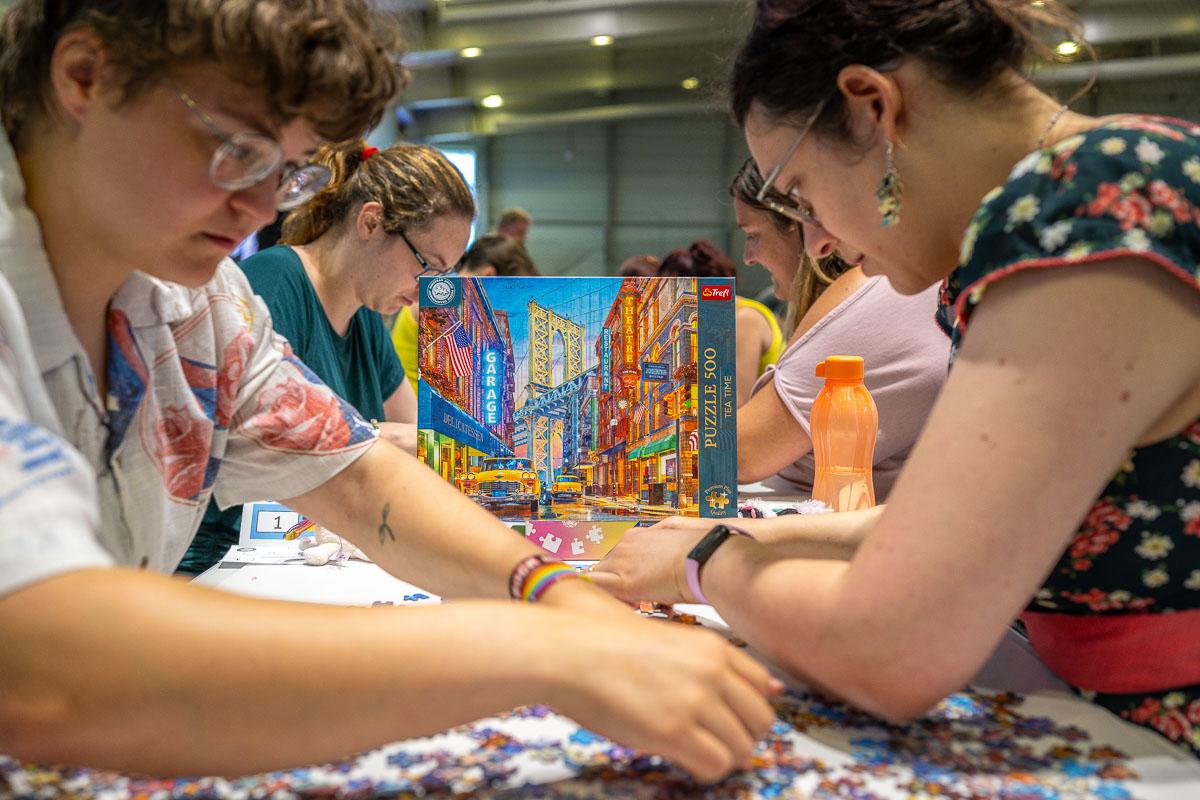
KR: It has changed, yes. I think about how I do a puzzle more and I can hardly do a 500 piece puzzle without speeding. Last weekend when I did a 7000 piece puzzle with Chiara, the experience unlocked the memory of how I used to do puzzles before the speedpuzzle era. This was very beautiful.
I think my conscious approach to these competitions is what helps me to still have fun doing puzzles. But also the community. We are all enthusiastic about puzzles, most of us have been into the hobby long before speedpuzzling came along. And coming together, just solving puzzles for fun, and not timing or trying hard to speed puzzles also helps a lot.
SPN: What are your three most loved puzzles?
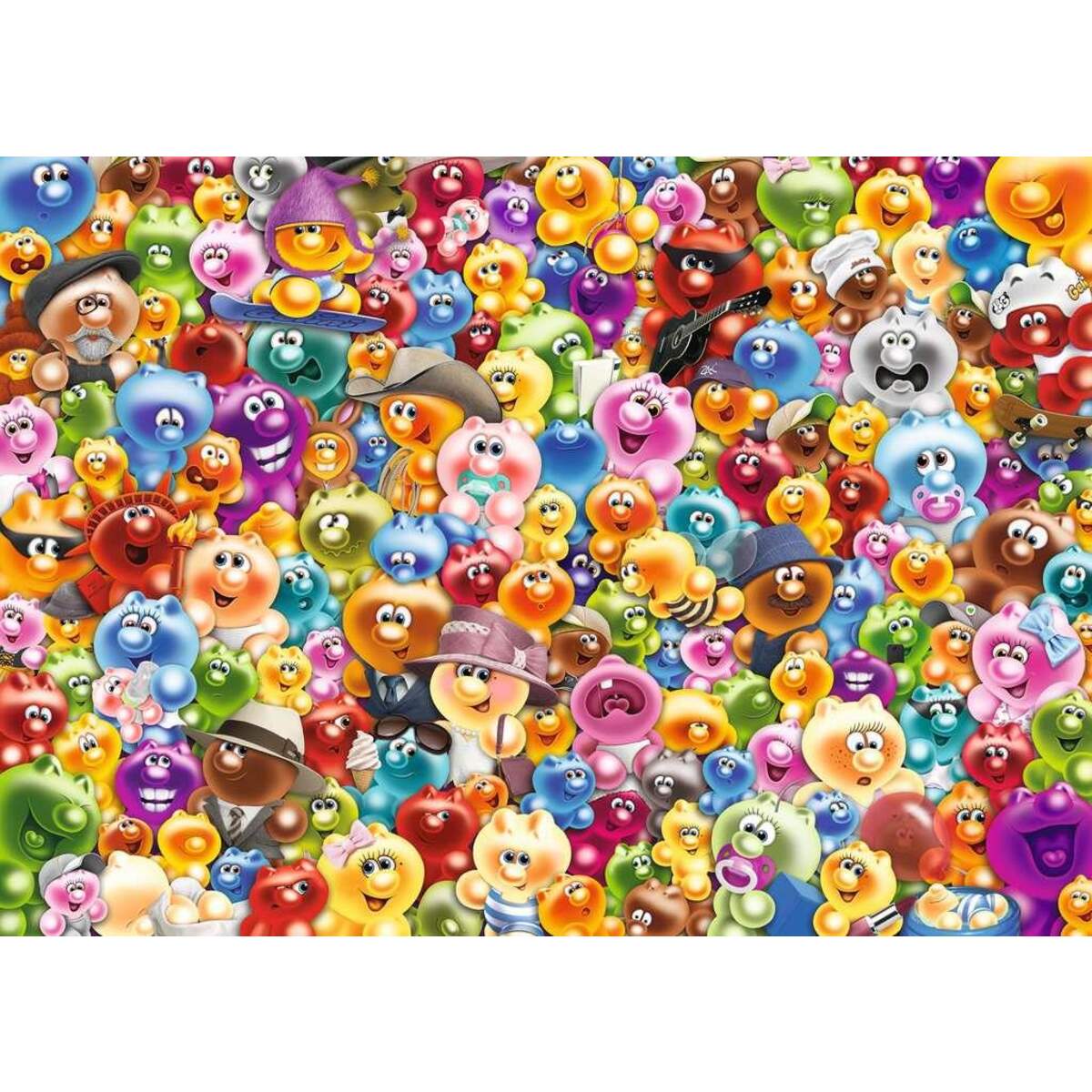
KR: All of my 500 Gelini puzzles have a special place in my heart. I own them since I was a little child and they remind me of my grandparents. When I do them, I can still see little Kathi assembling these pieces at their place.
SPN: Do you have any upcoming events or competitions that you’re especially excited about?
KR: I am very much excited for the upcoming teams’ marathon in Aschheim and puzzling with my friends for such a long time again. What I like about the marathons is that the focus is really just on having a great time together.
SPN: How do you see the future of competitive jigsaw puzzling? Do you think it could become a mainstream sport?
KR: I think people will keep getting faster, just as they did in the last years. Speedpuzzling will for sure get more known, but I think it won’t be super mainstream.
I would love to see us speedpuzzlers to continue being creative about new competition formats.
SPN: Finally, if you had to give one piece of advice for someone starting out with speed puzzling now, what would it be?
KR: Don’t get overwhelmed by the big puzzle. Try to see it as many little sub-images and work on them one at a time. Divide and conquer.